
The iPhone accessory market moves fast. Apple dropped MagSafe back in 2020 with the iPhone 12, and since then, we have seen a flood of cases claiming to be compatible. But when walking into a store or scrolling through Amazon, you see the term MagSafe case everywhere. It is slapped on boxes from brands you recognise and many you don’t.
The question is simple. What actually makes a case MagSafe, and should you care? For a lot of users, the difference between a magnetic case and a regular slab of plastic is bigger than you might think. For others, it is just an upsell. Our analysts have been looking at the data, and the answer depends entirely on how you live with your phone.
The Basic Engineering of a Magnetic Case
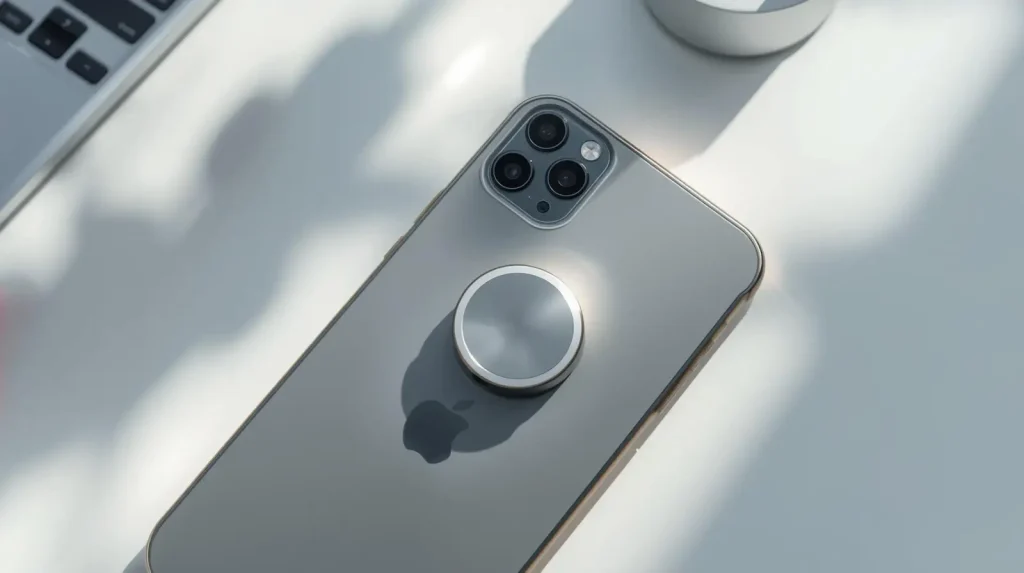
Let’s strip away the marketing. A standard phone case is a piece of material—silicone, polycarbonate, or leather—cut to fit your device. A MAGSAFE CASE has a circular array of magnets embedded inside that back panel.
These magnets are precisely aligned to grab onto the magnetic ring inside iPhone 12 models and newer. Without that internal magnet ring in the phone, a case can’t be MagSafe; it is just a case with metal in it.
The engineering here is tighter than most realise. It isn’t just about sticking. The magnets need to be strong enough to hold the phone to a vertical mount or to keep a wallet from sliding off in your pocket. We tested a few cheap options, and the magnet alignment was visibly off.
You get a weak connection, or the phone slides around on the charger. A legit MagSafe case solves that alignment issue instantly.
Charging Speed: The Tangible Metric
If you use wireless charging, this is where the difference stops being theoretical. Standard Qi wireless charging tops out at 7.5W for iPhone. MagSafe, when paired with a compatible case and a 20W+ brick, pushes that to 15W. . That is double the speed.
The phone might still charge, but it gets slower and runs hotter. Heat is the enemy of battery health. According to our data, users who slap their phone on a pad every night often wake up to a partially charged device because the phone shifted slightly.
The magnets in a MAGSAFE CASE lock it in place. It charges at full speed every time because the coil alignment is exact.
Beyond Charging: The Ecosystem Play
The real reason to buy a MAGSAFE CASE isn’t just the charging. It is the attachment. Think about how you use your phone throughout the day.
- Car Mounts: Forget the clip that grips your vent blades. A magnetic mount is cleaner. You slap the phone on, it sticks, and you take it off. No fumbling.
- Wallets: Apple popularised the sticky wallet on the back. It works because the magnets are strong enough to hold cards but weak enough to slide off when you want them to.
- Battery Packs: The snap-on battery packs are a game-changer for travel. You don’t hunt for a cable; you just stick the pack on the back and keep walking.
For professionals or heavy users, this integration saves minutes every day. It sounds small, but it reduces friction. A driver using GPS, a warehouse worker scanning items, a commuter tapping a transit card—the magnetic snap becomes second nature.
The Cost vs. Value Equation
Honestly, the price tag is the biggest hurdle. A standard case can cost $10 to $20. A MagSafe case from a reputable brand like Spigen or OtterBox runs $30 to $50. Apple’s own cases push $60.
So, does it make a difference worth that cash?
When it makes sense:
- You use wireless charging daily.
- You drive and use your phone for navigation.
- You are invested in the accessory ecosystem (wallets, stands, battery packs).
- You want the convenience of one-handed attachment.
When you can skip it:
- You exclusively use a cable to charge.
- Your phone lives in a bag and rarely sees a mount.
- You are on a tight budget and prioritise drop protection over features.
- You use an older iPhone or an Android device without the internal magnets.
The Android Angle
Quick note for non-iPhone users. Android phones don’t have the internal magnet ring. But the market adapted. Brands like Spigen now build cases for Samsung Galaxy devices that include the magnet ring in the case itself.
It gives Android users access to the same magnetic accessories. It isn’t quite the same as native integration, but it works for car mounts and chargers, provided the charger is compatible.
Thickness, Heat, and Daily Use
One complaint we hear is about bulk. A MAGSAFE CASE is marginally thicker than an ultra-slim case because it has to house those magnets. We are talking fractions of a millimetre, but for users who want the “naked” phone feel, it is noticeable.
Then there is heat. Wireless charging generates heat. Some users worry the case traps it. In our testing, a well-ventilated MagSafe case actually dissipates heat better than a bulky, rugged case because the magnets keep the phone from shifting into a position that blocks airflow. However, cheap cases with poor materials can insulate the heat, which isn’t great for the battery long-term.
Final Call A MAGSAFE CASE isn’t revolutionary for everyone. If you treat your phone as a basic tool for calls and texts, it adds zero value. But if your phone is a hub for work, media, and daily logistics.
the magnetic integration genuinely changes how you interact with the device. It turns the case from a piece of protection into a platform.